淘宝: 宝石资源库

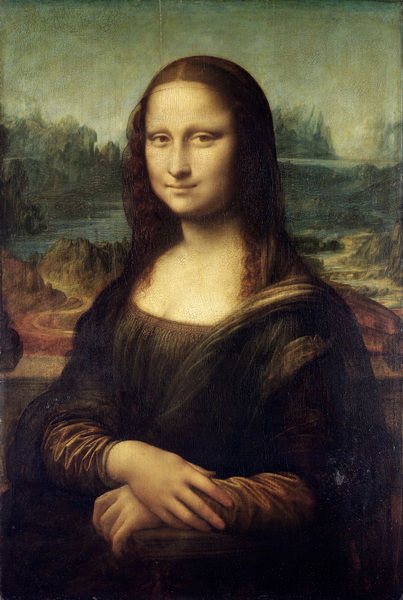
Mona Lisa, created by Leonardo da Vinci during the Renaissance

淘宝: 宝石资源库

The Mona Lisa is an iconic painting by Leonardo da Vinci, and here are some more detais:

1. Commission and Subject

The identity of the Mona Lisa is still a subject of some debate, but the most widely – accepted theory is that she was Lisa Gherardini, the wife of Florentine merchant Francesco del Giocondo. It is believed that the painting was commissioned to celebrate the couple’s new home and the birth of their second son. However, some scholars have proposed alternative identities, such as Caterina Sforza or even a self – portrait of Leonardo in female form, but these are less widely supported.

2. Leonardo’s Motives

Leonardo da Vinci was not just a painter but also a scientist, inventor, and engineer. He was deeply interested in human anatomy, optics, and the natural world. The Mona Lisa allowed him to showcase his mastery of various techniques and his understanding of human expression. He spent years perfecting the painting, using his knowledge of sfumato (a soft, smoky blending of colors) and chiaroscuro (the contrast between light and dark) to create a lifelike and mysterious figure. The background landscape, with its winding roads and hazy mountains, also demonstrates his fascination with nature and perspective.

3. Historical and Cultural Context

The painting was created during the High Renaissance, a period of great artistic and intellectual growth in Europe. Humanism, which emphasized the value and potential of the individual, was a dominant ideology. The Mona Lisa reflects this humanist focus by centering on an individual woman, capturing her unique expression and presence. Leonardo’s work also influenced later generations of artists, who were inspired by his technical skills and his ability to convey complex emotions.

4. The Painting’s Journey

The Mona Lisa has had a long and eventful history. It was in Leonardo’s possession until his death in 1519, after which it was acquired by King Francis I of France. It remained in the French royal collection for many years. After the French Revolution, it was moved to the Louvre Museum. In 1911, the painting was stolen by Vincenzo Peruggia, an Italian handyman who worked at the Louvre. He believed the painting should be returned to Italy. The theft caused a sensation, and the painting was missing for two years before it was recovered in Florence. Since then, it has remained one of the most popular and well – known artworks in the world, attracting millions of visitors to the Louvre each year.

5. The Enigmatic Smile

One of the most famous aspects of the Mona Lisa is her smile. It has been the subject of much speculation and analysis. Some have suggested that the smile is a result of Leonardo’s use of sfumato, which creates a soft, ambiguous expression. Others have proposed psychological interpretations, such as the idea that the smile reflects a complex mix of emotions, including happiness, mystery, and perhaps a hint of sadness or reserve. This ambiguity has contributed to the painting’s enduring appeal and has made it one of the most studied and discussed artworks in history.

More detailed information about Mona Lisa:

  • Creation and Completion Time: It was painted between 1503 and 1517. It’s uncertain when exactly it was finished, as some scholars believe Leonardo da Vinci might not have clearly indicated its completion or perhaps never fully completed it.
  • Auction Information: The original Mona Lisa has never been auctioned. However, in 2021, an artwork claimed to be by da Vinci and similar to Mona Lisa, dated around 1600, was to be auctioned by Artcurial on November 9. The estimated price was between 150,000 and 200,000 euros. In 2021, a copy of Mona Lisa by Leng Jun, Mona Lisa – Design of a Smile, was auctioned at Guardian. Its starting price was 58 million yuan, and the final transaction price with commission was 80.5 million yuan. In 2023, a replica of Mona Lisa was sold for 2.9 million euros at an auction in Paris.
  • Current Status: The Mona Lisa is currently housed in the Louvre Museum in Paris, France. It is placed behind bulletproof glass and protected by strict security measures.

FOR MONA LISA, we have SUPER HD Version, with over 120 Million Pixels. Probably the highest-Resolution that you could find online.
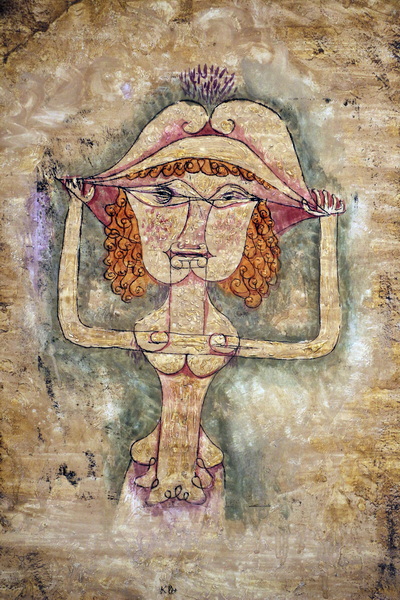
Paul klee, la cantante L. come fiordiligi, 1923, 02

The gallery of Paul Klee and his introduction

The gallery of Paul Klee’s artworks

Paul Klee (1879 – 1940) was a highly influential Swiss – German painter. Here is a brief introduction to him:

Life Experience

  • Early Years
    • Paul Klee was born in 1879 in Münchenbuchsee, a small town near Bern, Switzerland. From a young age, he had a passion for literature and art. During his middle – school years, he wrote short stories and poems. He was also an amateur violinist. In 1898, he went to Munich to study painting and entered the Munich Academy in 1900.
  • Creation and Teaching
    • In 1912, he joined the Blue Rider group. In 1920, upon the invitation of Walter Gropius, he taught at the Bauhaus. In 1925, he wrote “Pedagogical Sketchbook”. In 1931, he began teaching at the Düsseldorf Academy but was expelled by the Nazis and returned to Switzerland in 1933.
  • Later Life
    • In 1935, he suffered from scleroderma. On June 29, 1940, he died of a heart attack in Locarno.

Artistic Style

  • Blend of Abstraction and Figuration
    • Klee was skilled at combining abstract elements with figurative forms. His paintings often feature a mixture of geometric shapes and organic forms. The lines in his works are smooth and full of playfulness, making his works both mysterious and highly expressive.
  • Unique Use of Color
    • His use of color was outstanding. He conveyed rich emotions and atmospheres through color contrasts and combinations, regarding color as an integral part of the composition. His works have a fairy – tale – like quality, filled with imagination.
  • Musicality
    • Born into a musical family, Klee connected music with painting. He treated the canvas as a musical staff and color blocks as musical notes. Bright colors were like high – pitched notes, and dark, cool colors were like low – pitched notes, making his works full of musical rhythm.

Representative Works

  • “Subtropical Landscape”
    • This work showcases his unique understanding of color and form. The painting is filled with fantastic elements and rich color layers, as if transporting viewers to a mysterious subtropical world.
  • “Portrait of an Old Man”
    • With unique lines and colors, it depicts the demeanor and temperament of the old man. Through concise yet expressive brushstrokes, it reveals the old man’s profound inner world.
  • “Death and Fire”
    • Created in the final years of the painter’s life, the painting is filled with a desolate and sorrowful atmosphere. The black lines are heavy, and the pale figure in the middle, composed of symbolic language, resembles a skull. The word “tod” (German for “death”) indicates the theme of death.

Artistic Contributions

  • Advancing the Development of Modern Art
    • His free exploration of form and innovative use of color broke the boundaries of traditional art, elevating painting to a new level. His work had a significant impact on the development of Abstract Expressionism and the field of color.
  • Influencing Art Education
    • His teaching work at the Bauhaus promoted the development of modern design. His artistic concepts and research on children’s art provided important inspiration for later art education.

THE Gallery of Paul Klee

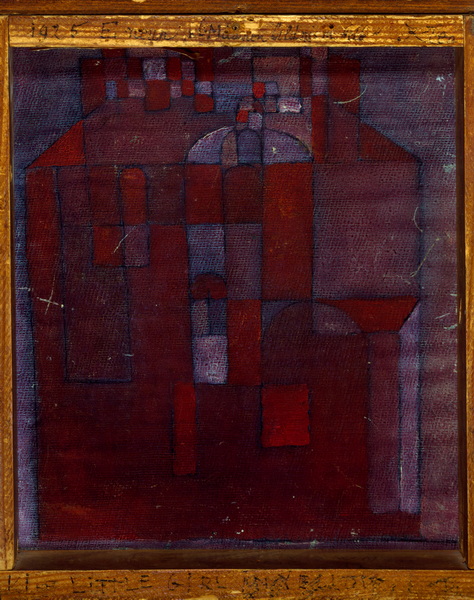
Small Portrait of a Girl in Yellow MET DT7811

Small Portrait of Little Girl in Yellow by Paul Klee

Small_Portrait_of_a_Girl_in_Yellow_MET_DT7811

“Little Girl in Yellow” by Paul Klee

Artist Information: Paul Klee (1879-1940)

  • Nationality: German (born in Switzerland)
  • Style: Expressionism, Cubism, Surrealism, and Abstraction – Klee was a highly individualistic artist who defied easy categorization. He explored various styles throughout his career.
  • Background: Klee taught at the Bauhaus school (a renowned German art and design school) from 1921 to 1931. This significantly influenced his artistic development and his theories on color and form.
  • Unique Qualities: Klee’s work is characterized by its poetic, dreamlike quality, vibrant colors, and a sense of playful experimentation. He often incorporated symbols, letters, and numbers into his compositions. He had a profound understanding of color theory and explored various techniques like layering paint, using textures, and creating intricate compositions.
  • Legacy: Klee is considered one of the most important artists of the 20th century, influencing generations with his innovative approach to art.

About “Little Girl in Yellow“:

  • Date: The exact date of creation for “Little Girl in Yellow” might require further research in specific Klee catalogs or archives. However, based on its style, it likely dates to the 1920s or early 1930s, coinciding with his Bauhaus period or shortly after.
  • Medium: Likely watercolor or gouache on paper, given the soft, luminous quality and the paper support.
  • Style and Composition:
    • Geometric Abstraction: The work demonstrates Klee’s signature geometric abstraction. The composition is built from overlapping rectangles and squares, creating a grid-like structure. This reflects the influence of Cubism but with a more playful and less rigid approach.
    • Color Palette: The use of color is central. The warm yellows and oranges dominate, creating a sense of vibrancy. The contrasting cool blues and purples in the underlying layers add depth and complexity. Klee masterfully layers colors, allowing underlying hues to peek through and create a luminous effect.
    • Symbolism: The small, circular shapes at the top might represent a simplified head or hair, hinting at the “little girl” subject. However, Klee often left his imagery open to interpretation, inviting viewers to bring their own associations.
    • Texture: A close look at the artwork might reveal subtle textures created by layering paint or through the paper itself. This adds another visual dimension to the piece.
  • Interpretation:
    • The title “Little Girl in Yellow” suggests a portrait, but the representation is highly abstract. Klee focuses on capturing the essence of a child-like spirit through color and form rather than a realistic depiction.
    • The geometric structure could symbolize the underlying order and structure Klee perceived in the world, while the vibrant colors express a sense of joy and vitality.
    • The overlapping rectangles and squares create a sense of depth and movement, suggesting the multifaceted nature of reality and perception.

Background Information:

  • Context: This work likely emerged during Klee’s Bauhaus period, where he explored the fundamental elements of art – line, color, and form – and their interrelationships. His teachings and theories at the Bauhaus significantly influenced his artistic output during this time.
  • Themes: Klee often explored themes of nature, music, and the cosmos in his work. While not directly evident in “Little Girl in Yellow,” these broader interests might have subtly informed his approach to composition and color.

To gain even more in-depth information, I recommend:

  • Researching Klee’s Bauhaus period: Understanding his artistic philosophy and teaching during this time will shed light on his stylistic choices.
  • Consulting the Paul Klee Foundation in Bern, Switzerland: They are the primary resource for Klee scholarship and might have specific information on this artwork.
  • Looking for scholarly articles and books on Klee: Numerous publications delve into his life, work, and artistic theories.

In conclusion, “Little Girl in Yellow” is a charming example of Paul Klee’s unique artistic vision. It showcases his mastery of color, his playful approach to abstraction, and his ability to evoke a sense of wonder and mystery through simple geometric forms.